
Transportation of Dangerous Goods: Road vs Rail Risk
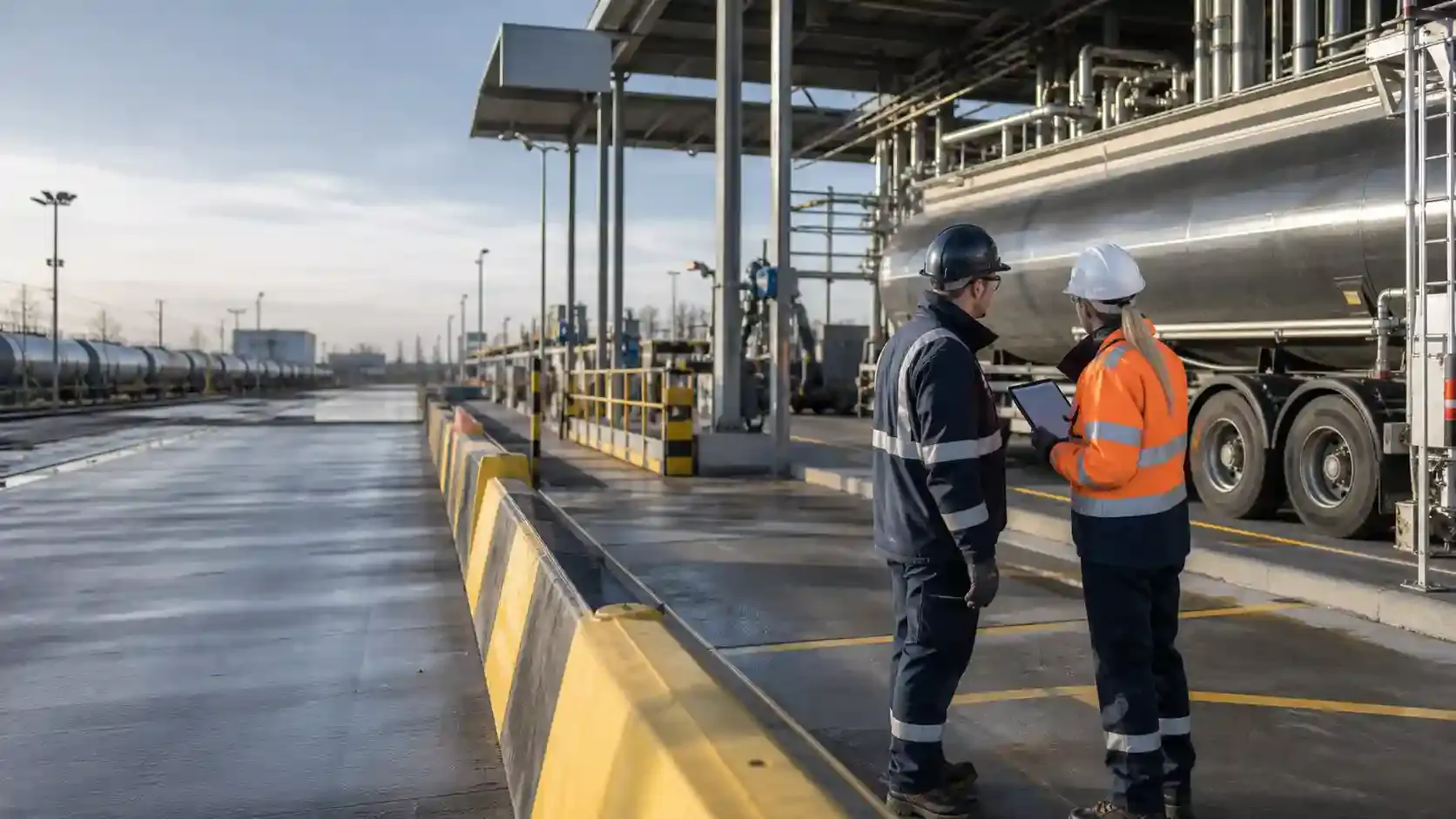
Hazardous-goods transport risk is shaped by the substance, package, route, transfer points and emergency capability. Compare road and rail using a process-safety lens.
Transportation of Dangerous Goods: Road vs Rail Risk
Transporting dangerous goods moves a process-safety hazard beyond the fence line. The same product can present very different risks by road and rail because the inventory, route, transfer points, traffic exposure, accessibility and emergency response all change.
Start with the transport chain
Risk assessment begins before a vehicle leaves site and ends after the load is safely received. Map packaging or tank selection, loading, documentation, labelling, route, security, stops, handover, unloading, cleaning and return. The weak point is often an interface: a wrong connection, an incompatible product, inadequate segregation, unclear paperwork or a rushed transfer.
The Department of Transport describes dangerous goods as chemicals and articles subject to transport, workplace, storage, consumer and environmental protection requirements. South Africa’s framework draws on harmonised dangerous-goods classification and applies across road and rail modes.
Compare road and rail honestly
Road transport can offer direct routing and flexible deliveries, but creates more frequent public interaction, variable traffic conditions and many loading or unloading interfaces. Rail can move larger inventories with fewer routine stops, but a derailment, route constraint or delayed access can create a complex major-incident scenario.
Neither mode is automatically safer. Evaluate:
- substance properties, quantity and packaging;
- route population, terrain, watercourses and critical infrastructure;
- potential collision, rollover, derailment, leak and ignition scenarios;
- driver or operator competence, fatigue and communications;
- condition of tanks, valves, couplings, placards and emergency equipment;
- availability and capability of responders along the route.
Control the loading and unloading interface
Loading is a high-consequence task. Use positive product identification, compatible connections, clear isolation, bonding and grounding where relevant, competent attendance, spill control and a defined stop-work authority. Confirm what happens if the transfer is interrupted, an alarm activates or the receiver cannot accept the load.
The origin and destination sites must share the same picture of the product, quantity, hazards and emergency arrangements. A carrier cannot manage a risk that the consignor has not communicated.
Plan the emergency response before the event
Emergency information should be current, accessible and usable by people outside the organisation. Identify contacts, first actions, isolation strategy, evacuation and shelter options, product information and specialist-response arrangements. Link site plans to MHI emergency response compliance where a facility interface could create off-site effects.
For higher consequence routes or large inventories, scenario modelling can inform route selection, land-use decisions and emergency planning. MMRisk supports hazardous-goods risk reviews, consequence analysis and emergency planning for industrial facilities. Contact us to discuss your transport interfaces.