
Hydrogen Safety: Managing the Future Energy Risk
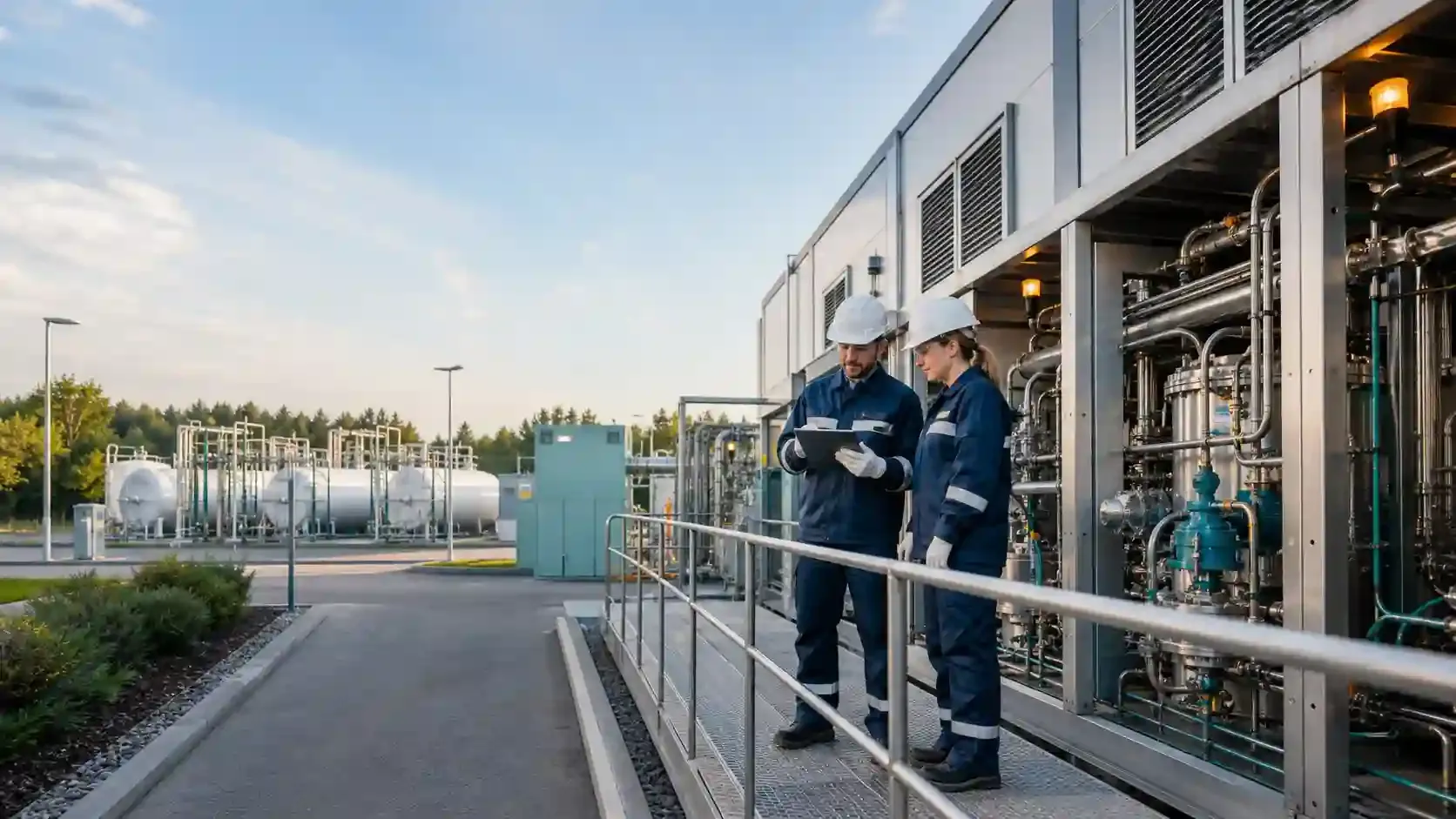
Hydrogen projects need a process-safety basis from the first concept sketch. Learn how to address leak, ignition, confinement and emergency-response risks before they become design constraints.
Hydrogen Safety: Managing the Future Energy Risk
South Africa’s hydrogen activity is moving from strategy into facilities, refuelling demonstrations and industrial projects. That makes hydrogen safety a design and operating priority, not a future footnote. The right time to address major-accident scenarios is before layouts, control systems and emergency plans are fixed.
Understand what changes the hazard picture
Hydrogen is not simply a cleaner substitute for another fuel. It has a wide flammable range, low ignition energy and can leak through small imperfections. Its flame can be difficult to see in daylight, and a release behaves very differently in an open, ventilated area than in a congested enclosure.
The safety question is therefore specific: where can hydrogen be released, how will it disperse, what can ignite it, and how will people detect and isolate the event? The answer changes between electrolysis, compression, storage, pipelines, blending, refuelling and ammonia-related operations.
Put HAZOP and layout decisions together
A HAZOP study should test credible deviations such as high pressure, reverse flow, loss of cooling, failed isolation, gas detection failure, vent blockage and incorrect purge sequence. Connect those deviations to the physical layout. Vent outlets, enclosed structures, cable routes, access paths and muster areas can either reduce or magnify the consequence.
Design teams should consider:
- minimising stored inventory and hazardous hold-up;
- segregating compression, storage and filling activities from occupied areas;
- providing ventilation that does not direct a release toward people or ignition sources;
- selecting detection, isolation and depressurisation arrangements for the scenario;
- preventing incompatible maintenance and ensuring safe purging before intervention.
Treat operations and changes as safety-critical
Hydrogen plants need disciplined operating limits, alarm response, competency and maintenance. A temporary bypass, an instrument range change or a new hydrogen user can alter the original risk assumptions. Use management of change to ensure documentation, training, maintenance tasks and emergency arrangements change together.
The same principle applies at interfaces. Where hydrogen supports ammonia, fuel cells, transport or existing process equipment, clarify who owns the isolation, trip response and incident command decision.
Build emergency planning around real scenarios
Emergency plans should identify how a leak will be detected, who can isolate it, when to evacuate, how to account for people and what information responders need. Drills should test decision-making under realistic conditions, not only travel to a muster point. The emergency-plan lessons from Boksburg provide a useful reminder that planning must connect site operations and community protection.
Use risk assessment to make trade-offs visible
Project teams often face difficult choices between plot space, equipment count, separation, vent routing and operational flexibility. Consequence modelling and, where appropriate, quantitative risk analysis make the trade-offs visible so that risk reduction can be designed in rather than added late as a compromise.
MMRisk helps teams facilitate early hazard reviews, model major-accident scenarios and develop practical emergency and risk-management measures for new energy projects. Contact our specialists before a concept design becomes expensive to change.