
Warehouse Safety: Chemical Segregation Rules That Prevent Escalation
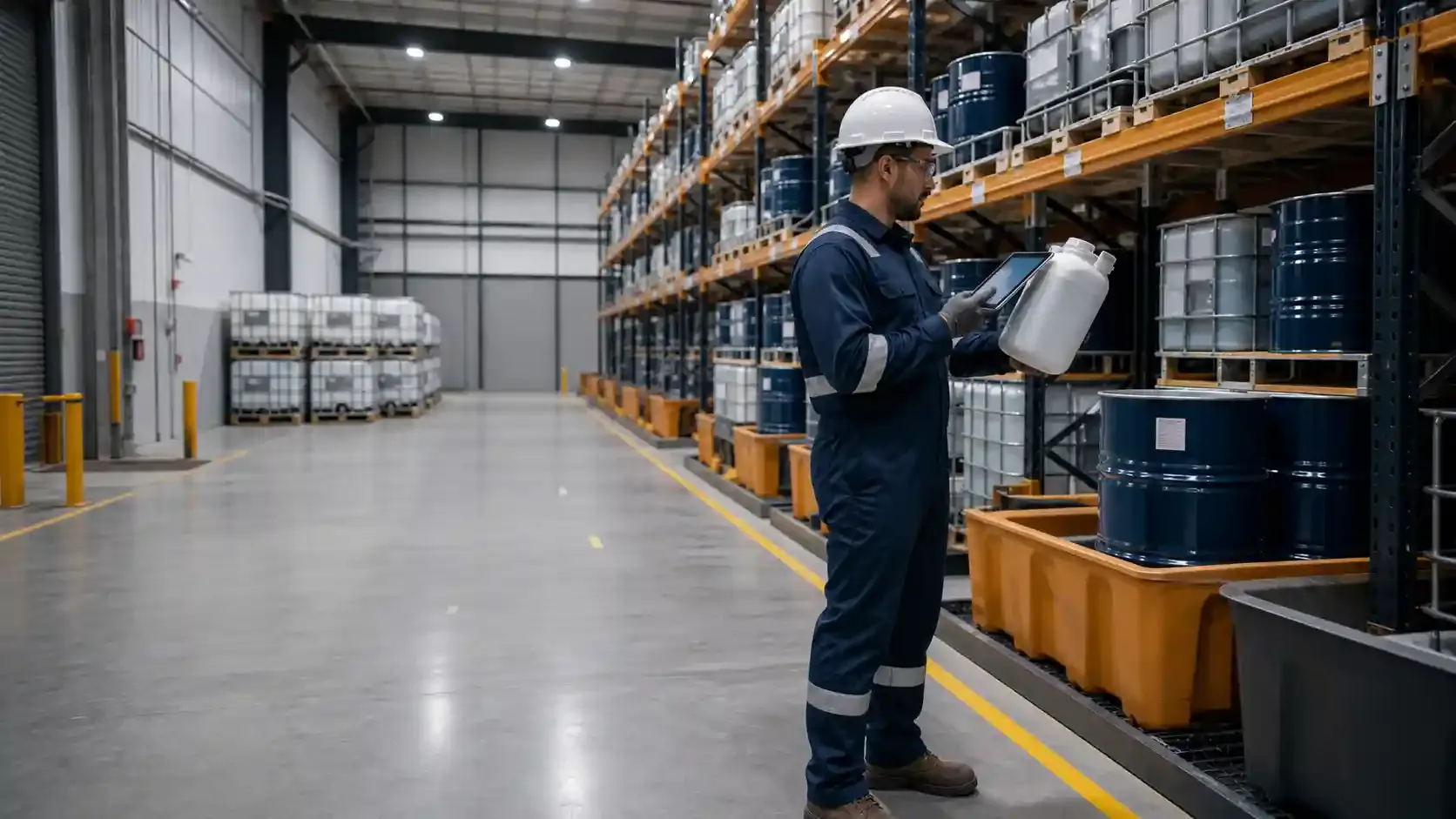
Good chemical storage is more than a row of labelled drums. Learn how compatibility, containment, ventilation and inventory control prevent a small leak becoming an escalating event.
Warehouse Safety: Chemical Segregation Rules That Prevent Escalation
A warehouse can hold an accidental reaction waiting for the wrong leak, wrong pallet location or wrong return drum. Acids, bases, oxidisers, flammables, toxics and water-reactive materials need controls that reflect their actual incompatibilities, not just their container labels.
Build the inventory before the layout
Start with an accurate chemical inventory and current safety data sheets. Record product identity, concentration, quantity, container type, hazard class, incompatible materials, temperature limits, spill behaviour and emergency information. Without this information, a storage map is only a guess.
Then build a compatibility matrix for the products actually on site. Do not rely on broad categories alone. A product’s additives, concentration and reaction pathways can matter as much as its primary label.
Segregation means more than distance
Separation uses distance. Segregation uses a physical barrier. Isolation prevents a release from reaching an incompatible material. The right approach depends on the credible spill, fire or drainage route.
Common failures include storing oxidisers with combustible materials, placing acids and bases where one spill can mix, keeping water-reactive materials near wash-down points, and locating flammables beside ignition sources or incompatible aerosols. Review racking, drains, doorways, forklift routes and damaged-goods areas as part of the control system.
Design for a leak, not just normal storage
Ask where a container failure will flow. Secondary containment, compatible flooring, controlled drainage, ventilation and spill kits should work together. A bund that collects two incompatible liquids is not a safeguard. A drain that carries a release to another part of the facility can turn a local event into an off-site problem.
Include chemical storage in your emergency response plan. Responders need an accurate inventory, accessible safety information, clear isolation points and a safe approach route.
Manage receiving, returns and damaged stock
Many warehouse failures occur during change. New products arrive without a storage decision. Returned stock is placed temporarily in an empty bay. A damaged drum is moved outside but remains exposed to rain or traffic. Use a receiving checklist that requires compatibility, location, containment and labelling decisions before stock is accepted.
Inspect labels, containers, racking and containment routinely. Give staff the authority to stop a placement when the product or bay is uncertain. Process safety culture is demonstrated by these small decisions.
Connect warehouse risk to the wider site
Where inventory, toxicity, flammability or location can affect people beyond the warehouse, use a structured assessment. Consequence modelling can test the release and escalation scenarios; MHI screening can clarify whether a formal process is required.
MMRisk assists facilities with chemical-inventory reviews, hazard identification, consequence assessment and emergency planning. Contact us to review your storage arrangements.